Why does my mum get more confused in the evening? Understanding sundowning in Barnet and…
Read
Enquire now to find out more about our tailored visiting and live-in care packages for your loved one.
Enquire nowChoosing between live-in care or a care home can be difficult when a loved one needs round-the-clock support, but families in Brentwood and Chelmsford have more than one option to consider.

Choosing between live-in care or a care home can be difficult when a loved one needs round-the-clock support, but families in Brentwood and Chelmsford have more than one option to consider.
When someone needs support around the clock, many families assume a care home is the only option. But for families in Brentwood and Chelmsford, live-in care at home can be a real alternative.
The decision often comes after a fall, a hospital stay or a worrying few months. A parent can no longer manage safely on their own, and the family starts looking at care homes. It can feel like the only route.
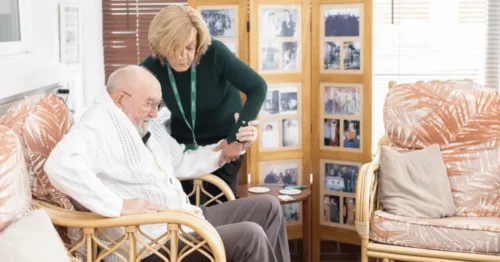
It isn’t. Live-in care allows someone to remain in their own home, with a Care Professional living alongside them and providing ongoing support.
It won’t suit everyone, and some people genuinely do better in a good care home. But it’s worth understanding both options before making a decision.
With live-in care, a trained Care Professional moves into the person’s home and provides support throughout the day and night.
They can help with personal care, medication, meals, housework and getting out and about. They’re also there if something happens during the night.
A live-in Care Professional has their own bedroom and agreed breaks. When they take time off, another familiar Care Professional provides cover.
In a care home, staff look after several residents at once. With live-in care, one person has one Care Professional dedicated to their support.
Meals can happen when they’re hungry, the day can follow their usual routine, and someone is there to notice small changes early.
Home is where someone’s memories, routines and neighbours are. For people living with dementia in particular, familiar surroundings can make a real difference to how settled they feel.
Pets can stay too, which matters more than people might expect.
When both partners need support, live-in care means they don’t have to be separated or move into a shared room somewhere new.
One live-in Care Professional can often support a couple, depending on their individual needs.
A good care home offers company, activities and people around throughout the day. Some people thrive on this, particularly if they’ve become isolated at home.
Live-in care can provide companionship too, while helping someone maintain relationships with friends, attend clubs and enjoy outings in Brentwood or Chelmsford.
However, it’s important to be honest about what the person enjoys and whether they would prefer more company or their own space.
If someone needs nursing care around the clock, a nursing home may be the right place.
Live-in care can support many complex conditions, and district nurses can visit people at home. However, a proper assessment is essential to establish what level of support is safe and appropriate.
Comparing live-in care or a care home is easier when you understand the level of support, social opportunities and daily routines each option can provide.
These questions can help you work out which option may be most suitable:
You can also request a care needs assessment through your local council to help understand what support may be available and what level of care is needed.
1. Can a couple have live-in care together?
Yes. One live-in Care Professional can often support a couple, depending on their individual needs, allowing them to remain together in their own home.
2. Does a live-in Care Professional need their own room?
Yes. A live-in Care Professional needs a private bedroom and somewhere to rest during their agreed breaks.
3. Can live-in care support someone with dementia?
Yes. Many people living with dementia do well with live-in care because they can maintain their familiar surroundings and routines, with consistent support from a familiar person.
If you’re weighing up live-in care or a care home for someone in Brentwood, Chelmsford or the surrounding villages, the GoodOaks Homecare Brentwood and Chelmsford team are happy to talk through what might work best.
We’ll give you an honest view, even if that means recommending that a care home would be more suitable.
Find out more about our homecare in Brentwood and Chelmsford, call 01277 715383, email brentwood@goodoakshomecare.co.uk or send us an enquiry.