


Winter loneliness in older people: Supporting parents in Horsham and Crawley
Read
Enquire now to find out more about our tailored visiting and live-in care packages for your loved one.
Enquire nowRegular homecare visits can provide a valuable second perspective on what care professionals notice day to day, from small changes in an older person’s appetite, mobility, mood and behaviour to differences in their usual routines.

What care professionals notice during regular homecare visits can provide families with a valuable insight into everyday life.
Nobody knows your mum or dad quite like you do.
You know how they take their tea, what makes them laugh and when “I’m fine” doesn’t really mean they’re fine. That knowledge, built over years, is irreplaceable.
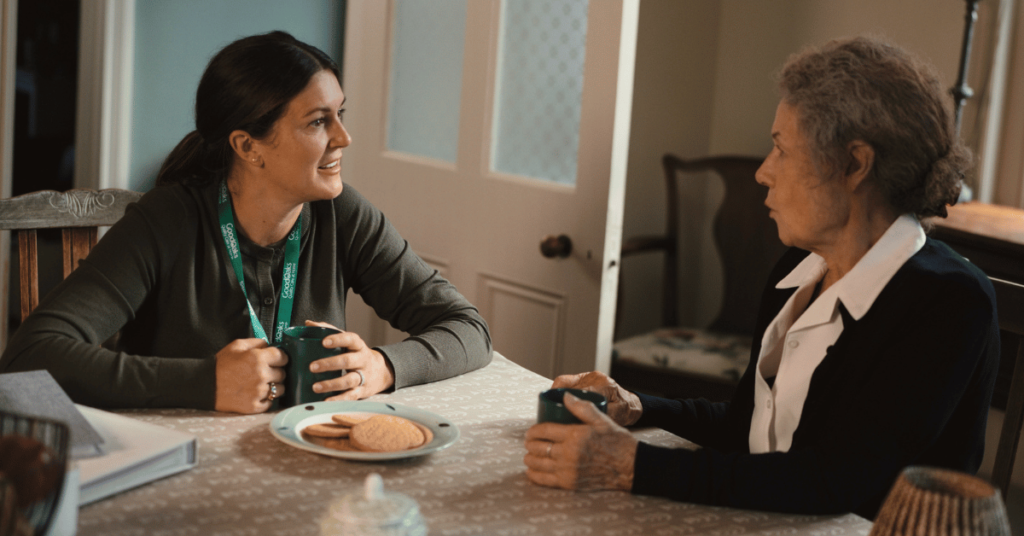
A care professional brings something different: a regular window into everyday life.
When someone visits regularly, they get to know a person’s routines, preferences and personality. They may notice changes in appetite, mobility, mood or behaviour simply because they know what is usual for that individual.
It’s not about diagnosing a medical condition. That isn’t the role of a care professional.
It’s about knowing someone well enough to notice when something seems different – and making sure the right people are aware.
Imagine you visit Dad every Sunday.
He looks smart, tells you he’s fine and makes you a cup of tea. Everything seems much the same as last week.
A care professional who visits several times during the week, however, might have noticed that Dad hasn’t been finishing his breakfast. He’s taking a little longer to get out of his chair. He hasn’t suggested his usual walk into the garden. Perhaps he’s simply been quieter than normal.
None of these things automatically means there is a problem. But when someone knows a person’s usual routine, small differences can be easier to spot.
That’s one reason continuity of care can be so valuable in homecare.
Food and drink are such ordinary parts of everyday life that changes can easily go unnoticed.
Perhaps someone who normally enjoys breakfast has started leaving most of it untouched. Drinks are being prepared but not finished. A client who usually looks forward to lunch suddenly seems less interested.
There could be many explanations, and a care professional shouldn’t make assumptions about the cause.
What they can do is notice the change, record relevant information and follow the appropriate process if they have a concern.
A fall isn’t always the first indication that somebody’s mobility or confidence has changed.
A person might start reaching for furniture as they cross the room. They may take longer to stand from their favourite chair, hesitate before using the stairs or stop asking to go into the garden.
These can be subtle differences.
What care professionals notice about mobility can be particularly useful because they become familiar with how someone normally moves around their home.
Observation isn’t diagnosis, but it can provide valuable information.
Not every change is physical.
Someone who normally chats throughout a visit may become unusually quiet. A person who looks forward to going out might repeatedly decline. Someone living with dementia may appear more unsettled than usual.
Family members can notice these things too, of course. But when relatives live further away or can’t visit every day, regular care visits can provide another perspective.
What matters is understanding what is normal for that individual and recognising when that normal pattern seems to have changed.
Supporting someone in their own home also provides useful context.
Perhaps unopened post has started accumulating.
Fresh food isn’t being used.
Laundry has been left unfinished.
A favourite hobby hasn’t been touched for a while.
Any one of these things could have a perfectly ordinary explanation. But a change in someone’s home or routine can sometimes suggest that something which was once easy has become more difficult.
The key is being observant without being intrusive.
To recognise a change, it helps to know what came before.
Over time, a familiar care professional might learn that Brian usually has porridge at 8am, walks into the garden afterwards and always chooses his own shirt.
They may know that Susan chats throughout her morning routine and rarely leaves a cup of tea unfinished.
These details may sound small, but together they build a picture of the individual.
Good homecare should never feel like simply working through a task list.
It should be about understanding the person behind those tasks.
The relationship works both ways.
A care professional may become familiar with someone’s daily routine, but families bring knowledge accumulated over decades.
Dad might insist he doesn’t want lunch, while his daughter knows he’ll nearly always eat scrambled eggs. Mum may become upset when she can’t find a particular handbag because it belonged to her mother. A familiar song might make somebody smile when they’re feeling unsettled.
Sharing these details helps care professionals understand the person behind the care plan.
Family knowledge and professional observation should complement one another.
Neither replaces the other.
Communication is another important part of continuity.
Relevant information about a visit and the support provided should be recorded so that those involved in someone’s care have an accurate picture of how things are going.
At GoodOaks Homecare Glasgow South, authorised family members and friends can also access visit updates through our secure Family App.
For a daughter living an hour away, that can mean seeing how Mum’s visit went rather than spending the evening wondering. For siblings sharing responsibility for a parent, it can help everyone stay informed and feel more connected to the care being provided.
It would be easy to describe a homecare visit as a list.
Breakfast. Personal care. Medication support. Shopping. Companionship.
But the human details matter too. What care professionals notice can often go beyond the tasks they are there to complete.
Remembering how somebody likes their tea.
Noticing that breakfast has gone untouched for the third morning.
Knowing when somebody wants a conversation and when they would rather enjoy some quiet company.
Recognising when today’s “I’m fine” doesn’t sound quite like yesterday’s.
At GoodOaks Homecare Glasgow South, our care professionals support people as individuals, with their own routines, preferences and personalities.
Because often, it’s the small details that help us understand the bigger picture.
If you’re beginning to think about care for yourself, a parent or someone you love, our friendly team is here to help. From regular visiting care and companionship to more tailored support, we can talk you through the options and help you find the right level of care for your circumstances.
There’s no pressure and no obligation. Just a conversation about what support could make life a little easier.
Get in touch with GoodOaks Homecare Glasgow South to find out more about care at home in your local area.