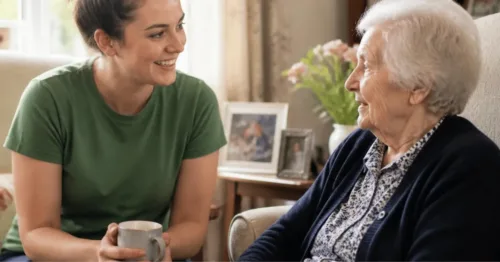




Supporting a lonely elderly relative from a distance
Read
Enquire now to find out more about our tailored visiting and live-in care packages for your loved one.
Enquire nowA dementia diagnosis rarely feels straightforward. For many families, it brings a mixture of emotions. Shock. Sadness. Relief at finally having answers. And often, fear about what happens next.

If someone you love has been newly diagnosed with dementia, it is natural to feel unsure about what comes next. Many families worry about how quickly things will change and what support is needed.
In reality, dementia is usually a gradual condition. With the right support in place, many people continue living independently at home for years after diagnosis.
Understanding what to expect after a dementia diagnosis can help you feel more confident and prepared.
After a dementia diagnosis, most people experience gradual changes over time rather than immediate decline. In the early stages, many people continue to live independently, maintain routines and enjoy daily life with light support.
Early planning, open conversations and introducing small amounts of support can help families feel more in control and avoid crisis situations later.
One of the most common fears after a dementia diagnosis is rapid decline.
In reality, dementia is progressive, but progression is usually gradual. For many people in the early stages of dementia, changes are subtle and develop over time rather than overnight.
In the early stage, a person may still:
There is rarely a need to make drastic changes immediately unless there are urgent safety concerns. Instead, this stage can be a valuable time to gently prepare, learn more about the condition and introduce light-touch support where helpful.
Taking proactive steps early is about building confidence, not reacting in crisis.
If possible, involve your loved one in conversations about their wishes, routines and preferences. A new dementia diagnosis can feel frightening, and maintaining dignity and control is incredibly important.
Having discussions together allows you to:
These conversations are often easier in the early stages of dementia, when your loved one can clearly express their views.
A diagnosis does not change who someone is. Their personality, history and identity remain.
Supporting someone newly diagnosed with dementia is not just about managing symptoms. It is about helping them continue to live well.
Practical ways to support early stage dementia at home include:
Early dementia support at home can significantly improve confidence and wellbeing, both for the individual and their family.
Many families only explore dementia support at home when things feel overwhelming. In reality, introducing support early can make a significant difference.
In the early stages, support might include:
As dementia progresses, care can adapt. Visiting care may gradually increase, or families may explore around the clock live-in care for more comprehensive support.
At GoodOaks Homecare, our specialist dementia care is tailored to the individual. We carefully match clients with trained Care Professionals who understand the complexities of dementia and focus on preserving independence for as long as possible.
You can learn more about our specialist dementia care at home and how we support families at every stage.
A new dementia diagnosis often raises practical questions about future care and funding.
Understanding your options early can reduce stress and help families feel more in control. Planning does not mean expecting the worst. It means making informed decisions at the right pace.
Our free Dementia care guide provides clear, compassionate advice for families navigating the early stages and beyond. It covers:
You can download our free Dementia care guide here.
Many families also worry about the cost of care. Our Paying for Care Guide explains funding options, financial planning and what support may be available.
As dementia progresses, some families notice changes in behaviour at certain times of day. For example, confusion or anxiety may increase in the late afternoon or evening.
This is often known as sundowning. Sundowning refers to changes in behaviour that typically occur in the late afternoon or evening. People living with dementia may experience increased feelings of agitation or anxiety during this time.
Understanding why this happens and how to manage it can make a significant difference to both the person living with dementia and their family.
If you are supporting someone newly diagnosed with dementia, your wellbeing matters too.
It is normal to feel anxious about the future. It is normal to feel unsure. Seeking guidance early, whether through trusted information or professional support, can make the journey feel far less overwhelming.
The most important message to hold onto is this: a dementia diagnosis does not mean immediate loss of independence or quality of life.
With understanding, preparation and the right support, people can continue living safely and happily at home for many years.
Whether you are looking for a little extra support or more regular care, our team is here to help you find the right approach.
Get in touch with your local GoodOaks team to talk through your situation and explore the support available.