

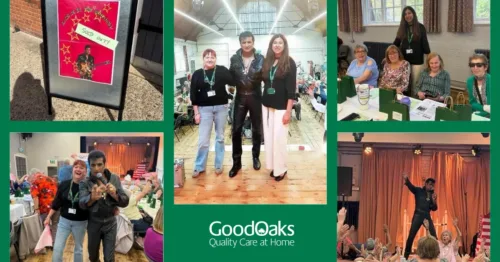
Sold out and swinging: GoodOaks’ second annual Elvis afternoon raises the roof for Age UK…
Read
Enquire now to find out more about our tailored visiting and live-in care packages for your loved one.
Enquire now
At GoodOaks Homecare, we’re here to help you not only spot the signs of a stroke but also support your loved one throughout their recovery journey.
According to the Stroke Association “Every day in May, 240 people will wake up to the life-changing impact of a stroke.”
A stroke happens when the blood supply to part of the brain is cut off, either due to a blockage (Ischaemic stroke) or a bleed (Haemorrhagic stroke).
Without prompt medical treatment, brain cells begin to die, which can result in long-term disability or even death. It can happen to anyone, including children, so it’s really important to understand and know the signs.
A stroke can happen suddenly and to anyone, regardless of age. Although the risk increases as we get older, strokes can also affect younger adults and children. This is why knowing the warning signs is so important.
Remembering FAST – Face, Arms, Speech, Time – can help you recognise some of the most common signs and know when it’s time to act.
Recognising the early symptoms of a stroke is crucial. Use the acronym FAST to remember the warning signs:
Other possible symptoms can include sudden weakness or numbness, changes to vision, confusion, dizziness, difficulty understanding what people are saying, or a sudden severe headache.
If you notice any of these symptoms:
Don’t attempt to give food, drink, or medication unless instructed by a medical professional.
The Stroke Association can provide lots of helpful information and resources to individuals and families who may have been affected by a stroke.
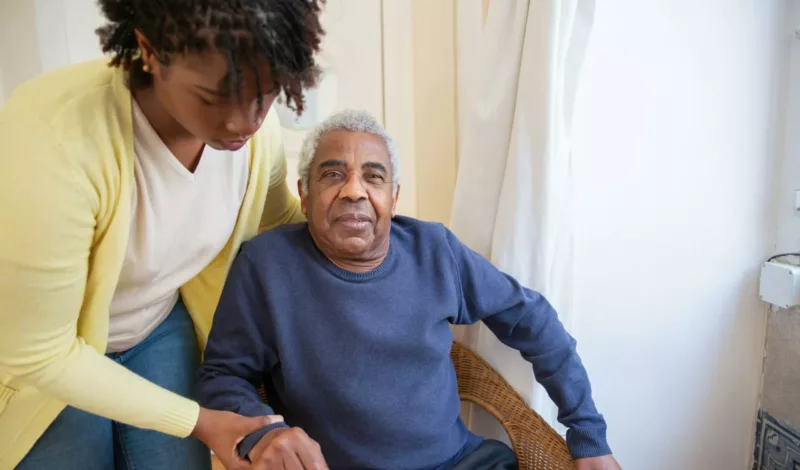
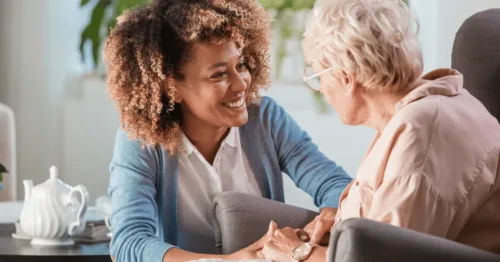
Recovering from a stroke can be a long and challenging process. That’s where GoodOaks Homecare comes in. Our specially trained care professionals provide compassionate, personalised support tailored to the unique needs of each stroke survivor.
We work closely with families, GPs, physiotherapists, and stroke specialists to deliver a consistent and coordinated care plan that evolves as recovery progresses.
At GoodOaks Homecare, we believe in delivering care with dignity, compassion, and respect. Our after-stroke care services are designed to promote independence while ensuring safety and comfort at home – where most people feel happiest.
Being able to recover in familiar surroundings can provide comfort and stability during what can be a significant period of change. We work alongside individuals and their families to provide care that fits around existing routines and adapts as needs change, helping people regain confidence and maintain their quality of life at home.
For more information, please contact us HERE.