



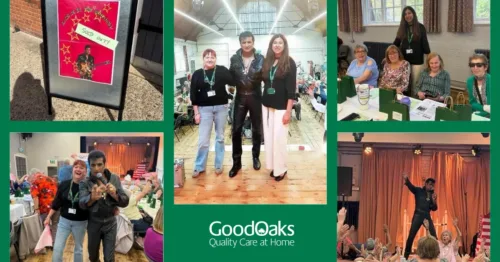
Sold out and swinging: GoodOaks’ second annual Elvis afternoon raises the roof for Age UK…
Read
Enquire now to find out more about our tailored visiting and live-in care packages for your loved one.
Enquire nowRealising that a loved one may need a little extra support at home can be difficult enough. For many families, the bigger challenge comes when that support is met with reluctance or resistance.

At GoodOaks Homecare Wimbledon and Kingston, and when talking about care, we regularly speak to families facing this situation. They may have noticed changes in mobility, confidence, memory, or daily routines, yet their loved one insists they are managing perfectly well.
Others may feel anxious about welcoming someone new into their home or worry that accepting support means losing their independence.
While these conversations can be emotional, approaching them with patience, empathy, and understanding can make a real difference when talking about care in Wimbledon and Kingston.
There are many reasons an older person may be hesitant to accept support at home.
Common concerns include:
For those living with dementia or experiencing memory loss, changes to routine can also feel unsettling or confusing.
In many cases, resistance comes from fear, uncertainty, or a desire to maintain normality rather than a refusal of help itself.
When we are concerned about someone we love, it is natural to want to find solutions quickly. However, introducing care is often more successful when it feels like a conversation rather than a decision being made for someone.
A calm, supportive discussion is usually the best place to begin.
Questions such as:
Can help open the conversation without making someone feel pressured or overwhelmed.
Often, focusing on the benefits of support rather than the need for care can help people feel more comfortable exploring their options.
One of the most effective ways to help someone feel comfortable with care is to introduce support gradually.
This could begin with:
Starting with small amounts of support allows trust and familiarity to develop naturally over time.
Many families across Wimbledon and Kingston find that once a care professional becomes a familiar face, their loved one begins to recognise the benefits and feel more comfortable accepting help.
Many people worry that accepting care means losing their independence. In reality, the right support can often help someone remain independent for longer.
Support at home can help people:
When care is presented as a way of supporting independence rather than replacing it, people are often more open to the conversation.
Sometimes the need for support becomes more urgent. Missed medication, increasing confusion, difficulty preparing meals, poor nutrition, falls, or changes in personal wellbeing can all indicate that additional help may be needed.
In these situations, families may need to take a more proactive role while still involving their loved one in decisions wherever possible. Finding the right balance between safety and independence is often key.
Families do not have to navigate these conversations alone.
If you are considering home care or visiting care services in Wimbledon or Kingston upon Thames, speaking with your local GoodOaks team can help you understand the options available.
At GoodOaks Homecare Wimbledon and Kingston, we take the time to understand each individual’s circumstances, preferences, and goals before creating a personalised care plan.
Whether someone would benefit from companionship, visiting care, or more regular support, our focus is always on introducing care in a way that feels respectful, reassuring, and tailored to their needs.
If a loved one is reluctant to accept care, it does not mean support cannot be successful. Often, it simply means the conversation needs time, patience, and the right approach.
By starting discussions early and introducing support gradually, families can help loved ones maintain their independence, preserve their dignity, and continue living safely and comfortably at home for as long as possible.
If you would like advice about home care in Wimbledon and Kingston, our friendly team is here to help you explore the options available and find the right support for your family.